

Space Stocks Weekly #4
Starlink IPO update, Planet Labs reports first quarter of adjusted EBITDA profitability, Rocket Lab schedules its 63rd mission, and more!


Good morning, space investors!
Before diving into this week’s updates, I want to thank you for following my weekly newsletter and welcome the two new subscribers—AD LUNAM now has 118 subscribers!
To get my new posts directly in your inbox, you can subscribe to my newsletter here.
The format
Here’s how Space Stocks Weekly works: I start by sharing the latest news on publicly traded space companies, followed by updates on the broader space industry, including private companies.
This way, you get the full picture of what’s happening in the space industry.
A Quiet Week for Space Stocks
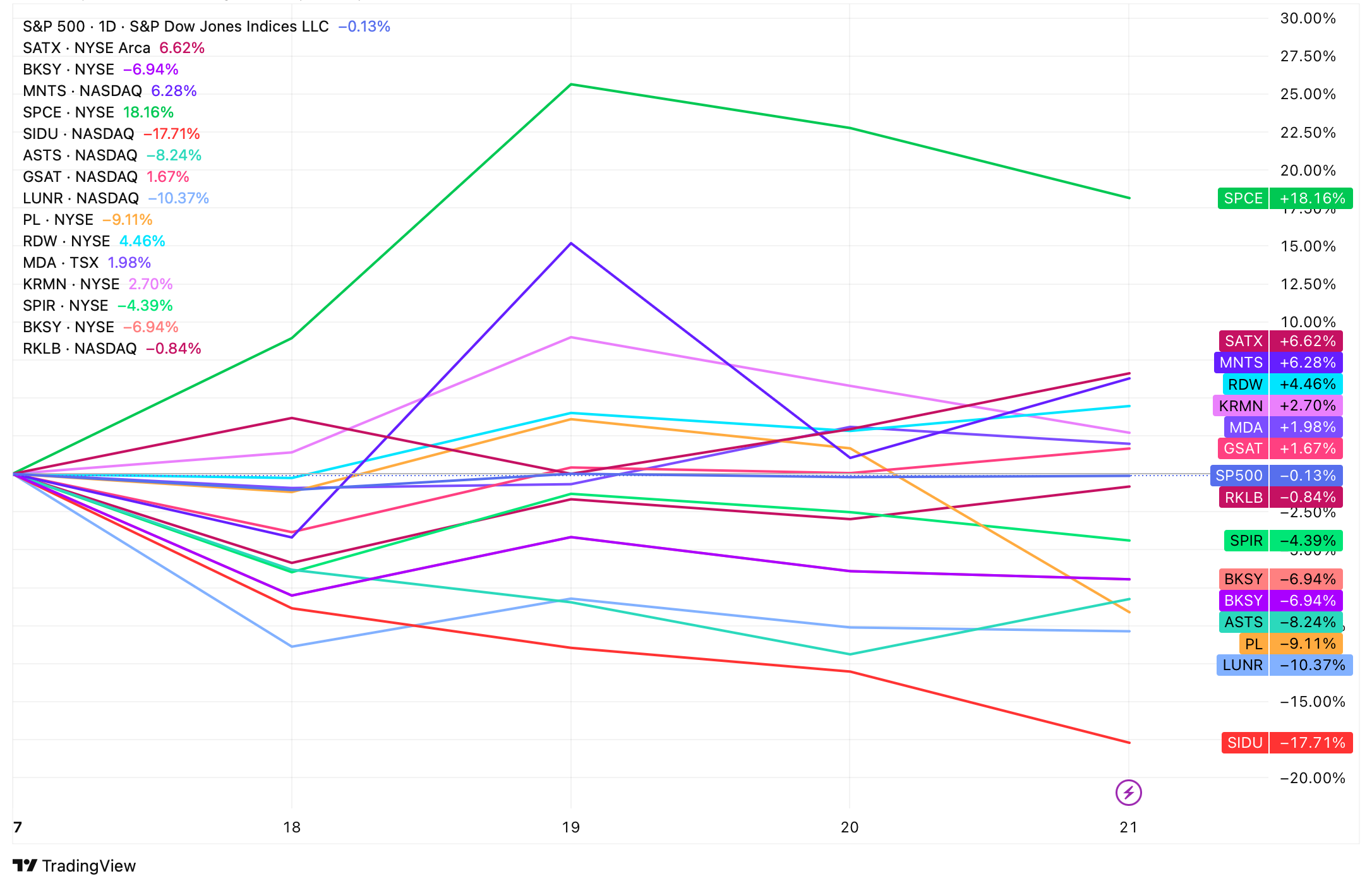
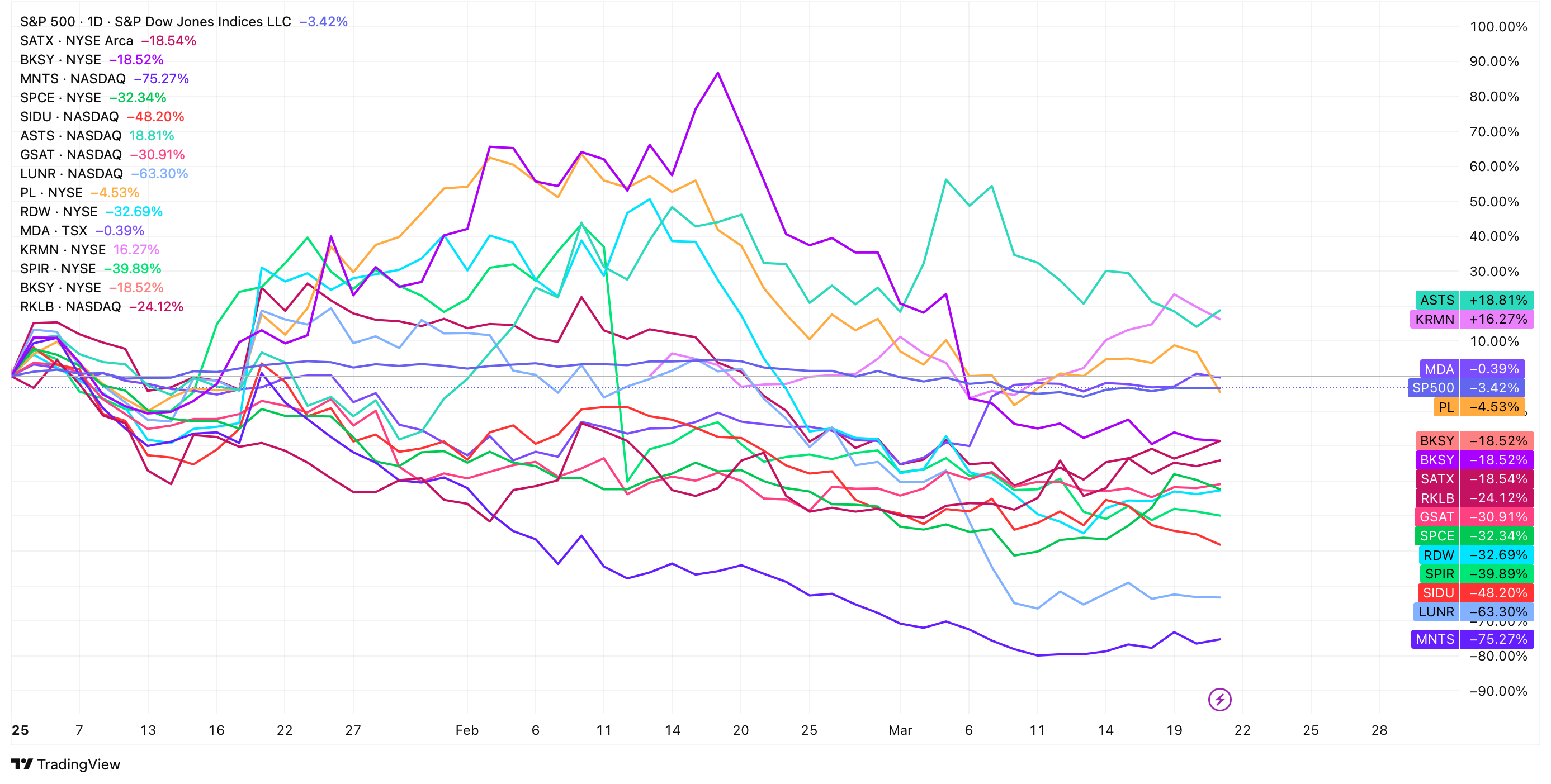
This week, space stocks have been consolidating after weeks of decline. Like many other small and mid-cap companies, they’ve been hit hard over the past few weeks due to uncertainties around tariffs and concerns about rising inflation. However, space stocks have got a bit of a break over the past few days.
On Wednesday, the Fed’s rate decision was welcomed by the market, especially by small companies. Space stocks reacted positively, with most closing in the green after the Fed hinted two possible rate cuts later in 2025. Lower interest rates reduce borrowing costs, which is beneficial for smaller companies that rely on loans to grow.
Space Stocks Updated Earnings Calendar
Here’s the updated calendar with the latest official dates for Q4 earnings reports:
LUNR 0.00%↑ March 24 (Before Market Open)
Rocket Lab Completes Kinéis Constellation and Schedules 63rd Mission
This week, Rocket Lab successfully launched its 62nd Electron mission "High Five" on March 18, 2025, from New Zealand. This mission marked the fifth and final launch for Kinéis' constellation of 25 IoT satellites. Rocket Lab completed the deployment of Kinéis’ full constellation within a year. Previous launches took place in June, September and November 2024, as well as February 2025, with each mission deploying five nanosatellites.
Rocket Lab is already preparing for its 63rd mission, "Finding Hot Wildfires Near You," scheduled for launch on March 27. This mission will deploy eight wildfire detection satellites into a 550 km low-Earth orbit. These satellites will be deployed just four months after Rocket Lab signed the launch contract with OroraTech. This launch will also mark the company's third Electron mission in just 12 days.
Planet Labs Announces First Quarter of Adjusted EBITDA Profitability
On March 20, Planet Labs reported its earnings for Q4 of fiscal year 2025. Overall, the company posted great results, reporting a first profit in adj. EBITDA with $2.4 million. Planet Labs also reported a record annual revenue of $244.4 million, an 11% increase from the previous year. As of January 31, the company has a backlog of $498.5 million and expects to recognize about 38% of this backlog as revenue within the next 12 months, around 70% over the next 24 months, and the remainder thereafter. Planet Labs ended the year with $222.1 million in cash, cash equivalents and short-term investments.
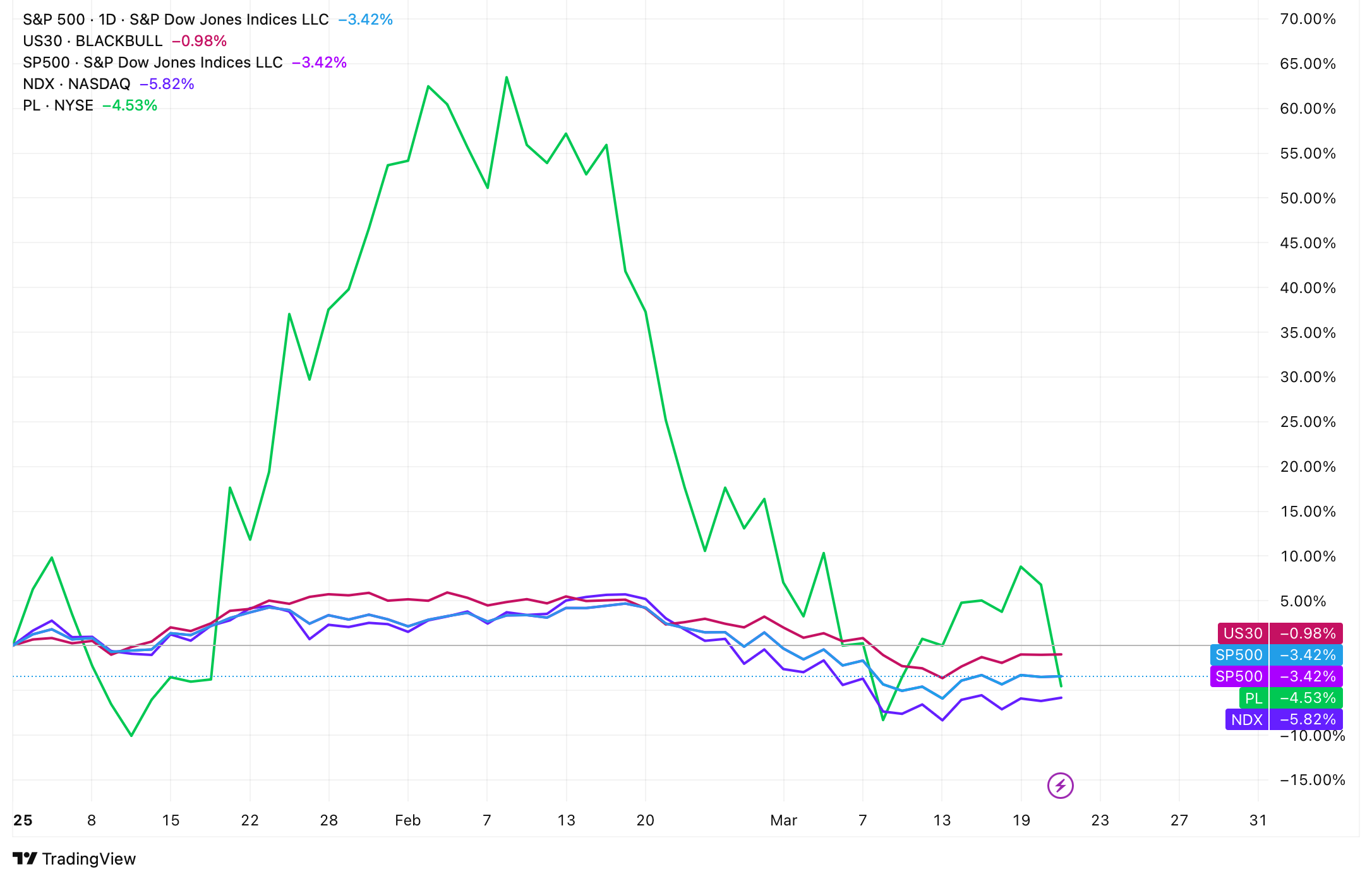
Following the results, the stock was down 10% in after-hours trading.
Planet Labs stock performance year-to-date
The same day, the company also released first images captured by their Pelican-2 satellite, which was launched aboard a SpaceX Falcon 9 on January 14.
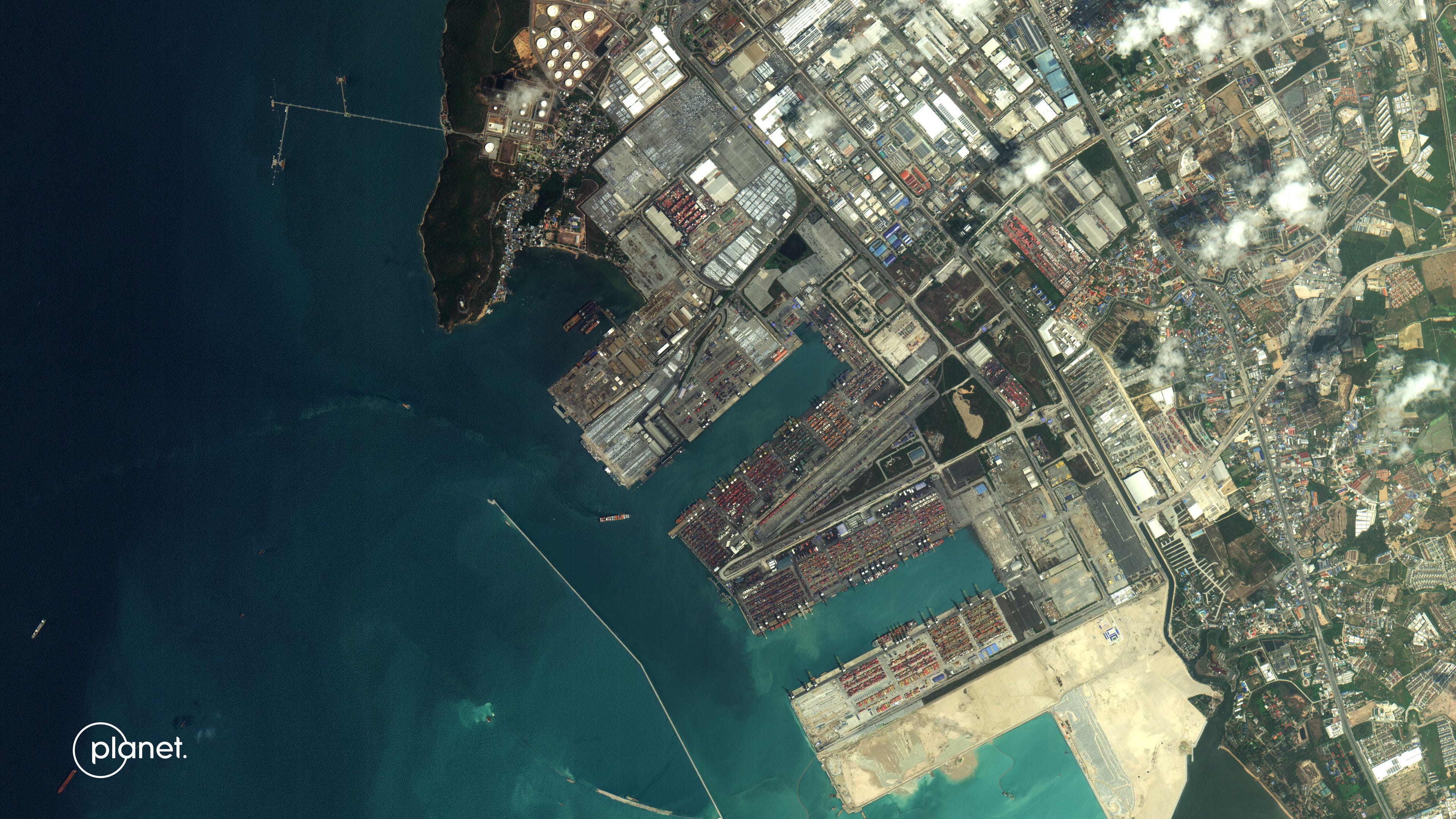
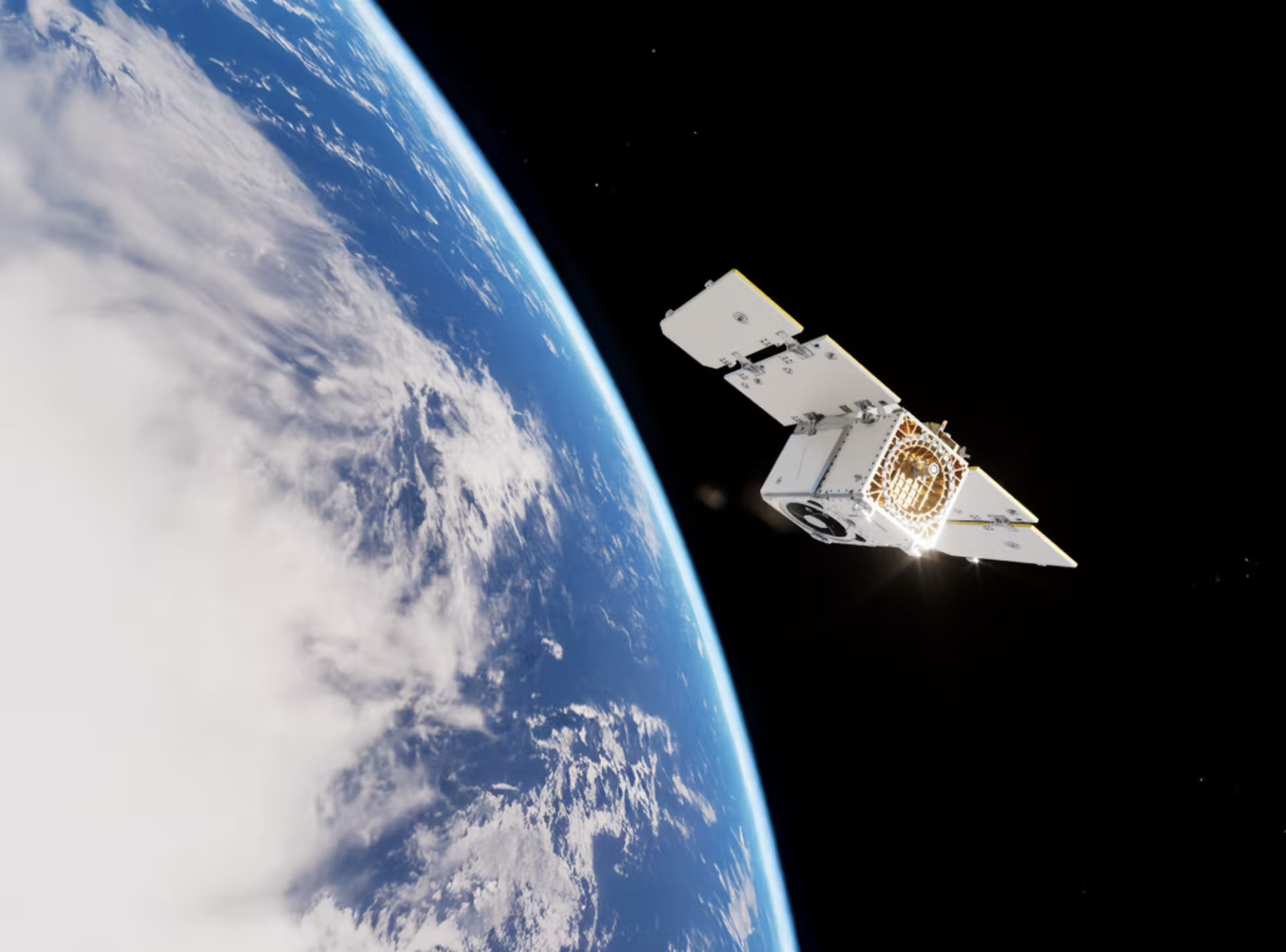
Planet Labs’ Pelican-2 satellite is designed to deliver high-resolution imagery with 40 cm class resolution across six multispectral bands. In partnership with Nvidia, Planet Labs equipped the satellite with Nvidia’s Jetson platform, which enables AI computing onboard to deliver faster insights to customers.
Starlink Public Offering Is Still Some Time Away
All space stock shareholders are eagerly waiting for Starlink to go public, but it looks like that won’t happen anytime soon.
Last week, the SATELLITE 2025 conference took place, bringing together CFOs from many satellite internet constellation companies to discuss their strategies and the future of the industry.
SpaceX CFO Bret Johnsen discussed Starlink's goal of becoming a more reliable service for businesses, particularly in industries like maritime and aviation.
While Starlink has already secured enterprise customers without Service Level Agreements (SLAs), adding them would increase its appeal to these sectors. SLAs guarantee things like bandwidth, uptime, and availability. However, for years, customers have been frustrated by Starlink’s lack of these guarantees.

As for an IPO, Johnsen made it clear that it’s not in the near future.
“We’re laser-focused on operations right now”
— Bret Johnsen, SpaceX CFO
The SpaceX division is focused on expanding its operations and improving its financial position, before considering going public.
Other panelists during this conference included CFOs from Intelsat, Iridium, and Speedcast.
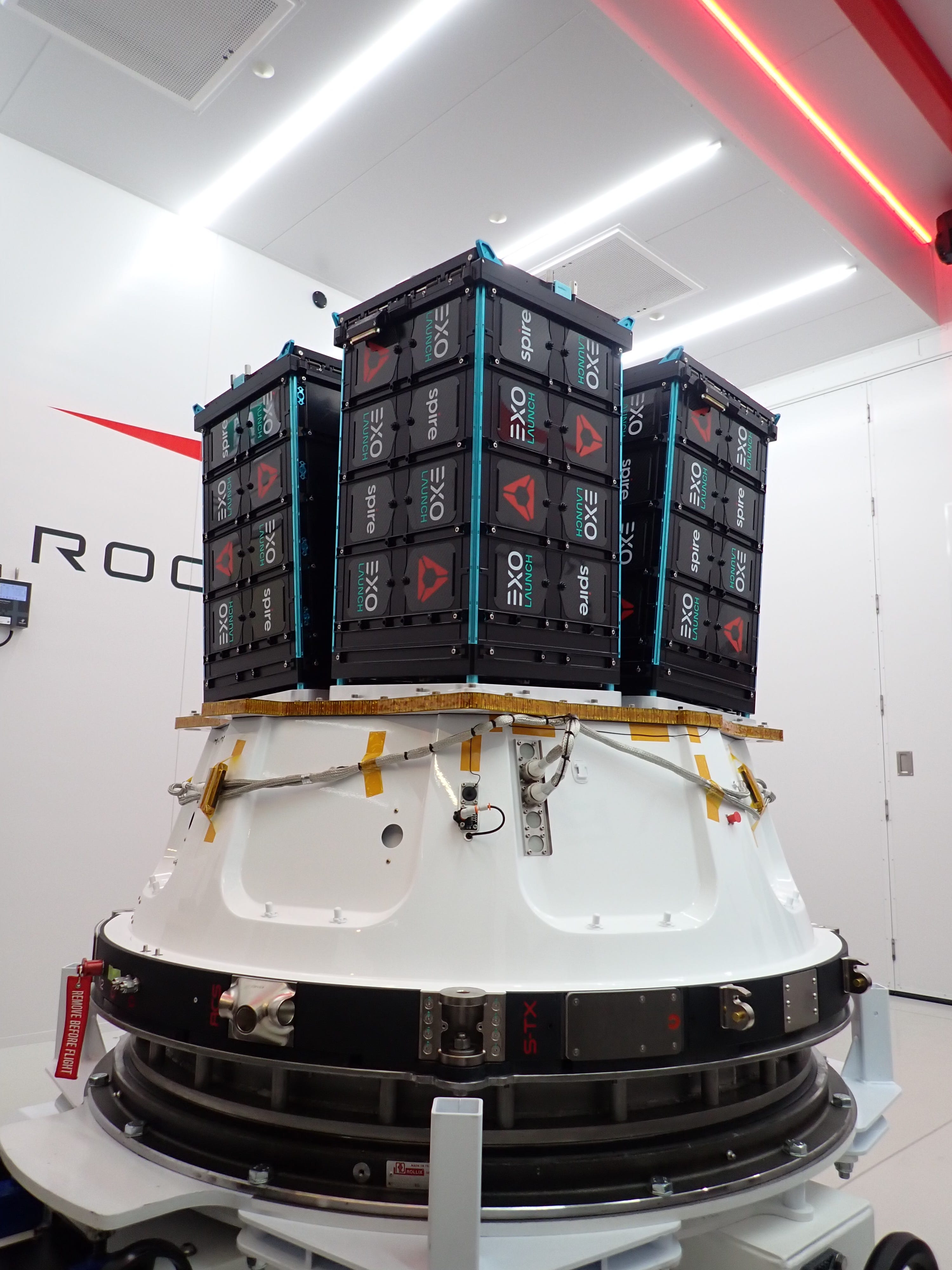
Photo of the Week

By subscribing to this newsletter, you are supporting the creation of insightful, high-quality content focused on the space industry.
As a paid subscriber, you will gain access to additional exclusive benefits:
Exclusive deep dives into space stocks and company developments
Full insights into quarterly space stock reports
Access to a subscriber-only chat for in-depth discussions and transparent updates on my portfolio moves
Upgrade today to get the most out of the space industry!
Stranded Astronauts Return After 9 Months in Space
On March 18, 2025, SpaceX’s Crew-9 mission successfully concluded with the safe splashdown of the Crew Dragon "Freedom" capsule off the coast of Florida. The crew, consisting of NASA astronauts Nick Hague, Sunita Lyn "Suni" Williams, and Barry "Butch" Wilmore, along with Russian cosmonaut Aleksandr Gorbunov, spent about nine months aboard the International Space Station (ISS). During their time on the station, they completed over 900 hours of research and participated in more than 150 experiments.
The return of Suni Williams and Butch Wilmore was delayed due to technical issues with the Boeing CST-100 Starliner. The spacecraft had issues with its propulsion system. As a result, their mission, initially planned for one week, was extended far beyond its original timeline. NASA decided to keep them aboard the International Space Station while Boeing and NASA’s teams continued analyzing the Starliner’s performance.
Later, NASA chose to return the Starliner spacecraft uncrewed, as it did not meet the necessary safety standards for a crewed return.
“Spaceflight is risky, even at its safest and most routine. A test flight, by nature, is neither safe, nor routine. The decision to keep Butch and Suni aboard the International Space Station and bring Boeing’s Starliner home uncrewed is the result of our commitment to safety: our core value and our North Star.”
— Bill Nelson, 14th NASA Administrator
Ultimately, the two astronauts, Butch Wilmore and Suni Williams, were brought home aboard a SpaceX Crew Dragon capsule.
The Crew-9 mission launched in September aboard a SpaceX Crew Dragon with only two astronauts, to allow for the return of Butch and Suni last week.
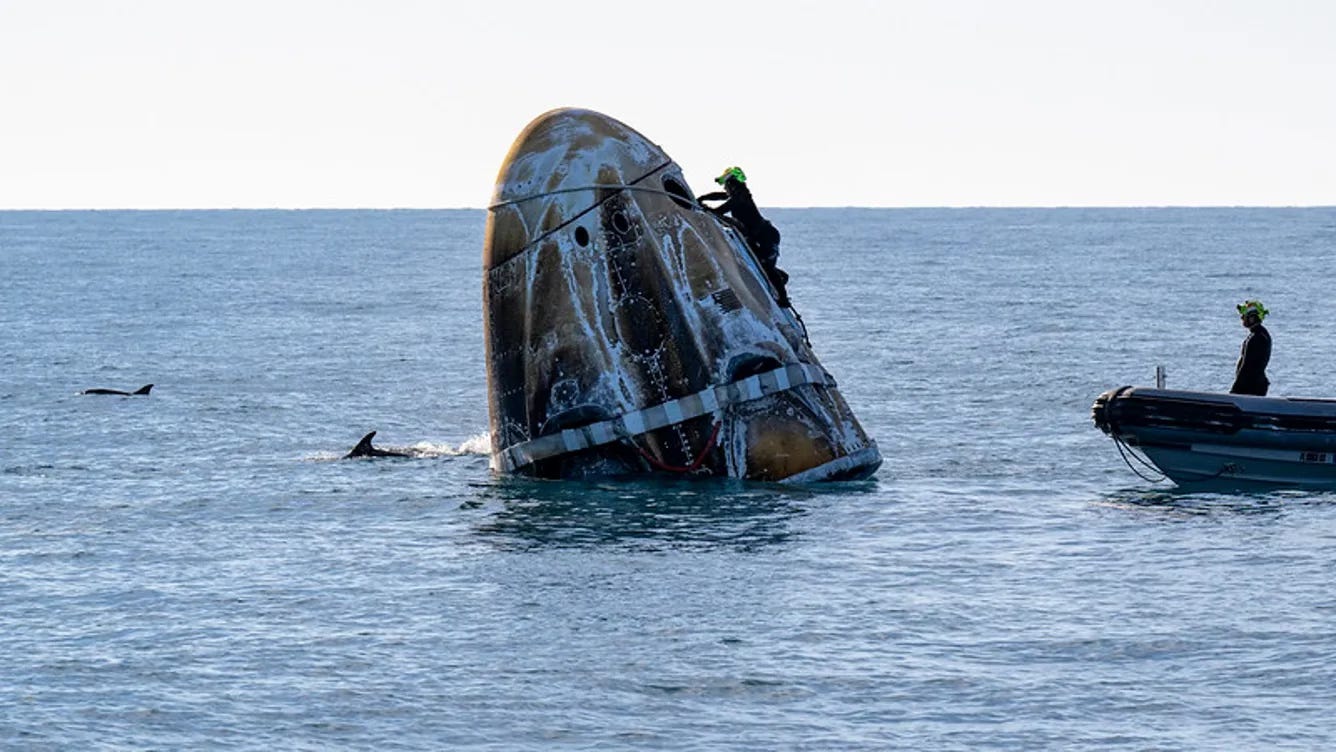
On March 18, the Crew Dragon capsule carrying Crew-9 safely landed off the coast of Florida, marking the successful end of the mission. The four astronauts aboard were greeted by a pod of dolphins as the SpaceX recovery team worked to secure the capsule.